
Loading...
Serving Walla Walla, WA and surrounding areas. (509) 516-0681
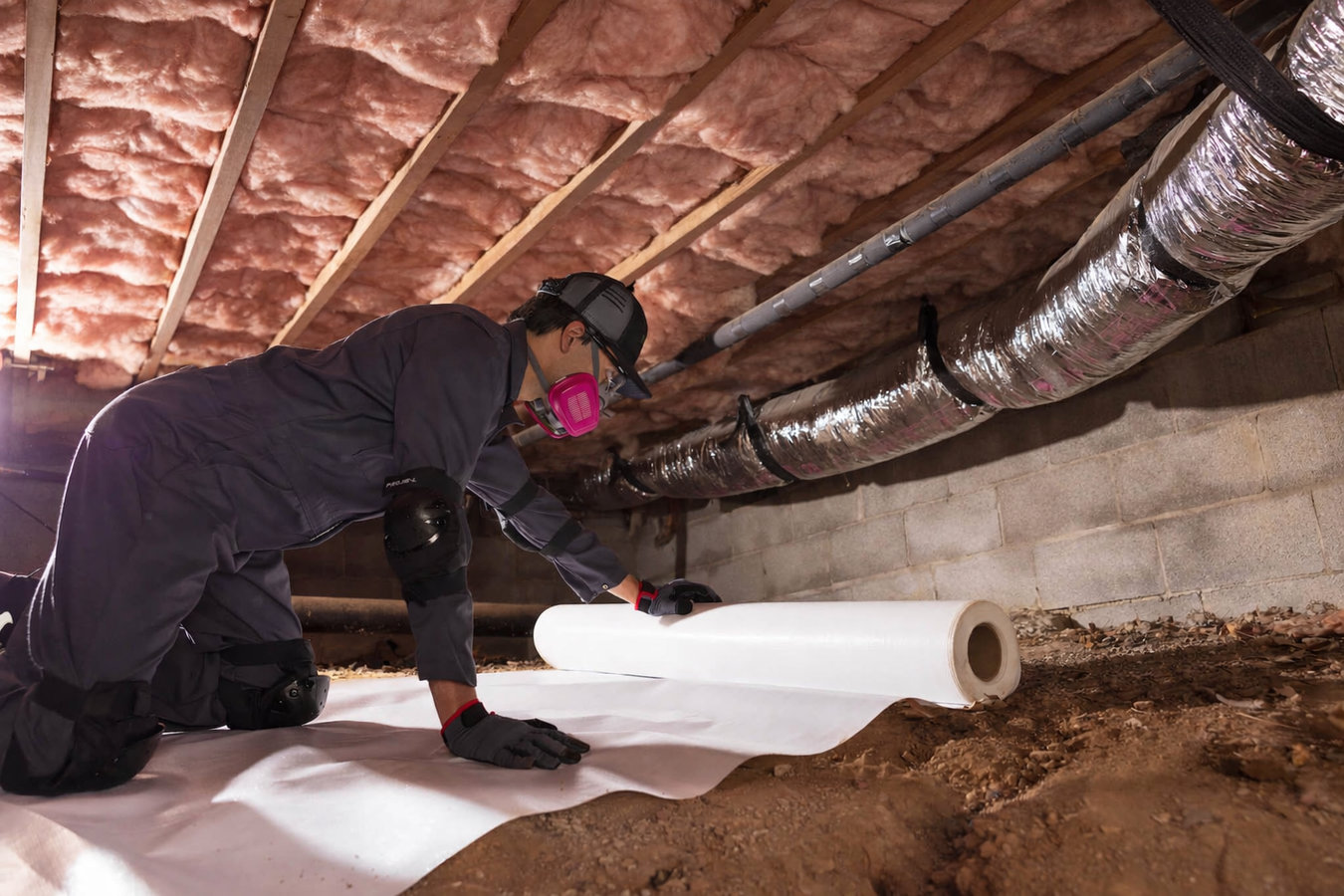
Ground moisture quietly damages floor framing, drives up heating costs, and causes musty odors. A properly installed vapor barrier stops it at the source before the repair bill arrives.
Vapor barrier installation in Walla Walla means laying thick, durable plastic sheeting in your crawl space or along below-grade walls to stop ground moisture from migrating up into your floor framing and living areas - most jobs take one to two days with no disruption to your home, and the work is done entirely below or around your living space.
Walla Walla winters bring consistent cold and precipitation, and the valley's agricultural irrigation keeps soil moisture elevated even during dry summers. That sustained moisture pressure against unprotected crawl spaces causes the problems most homeowners recognize: floors that feel cold in January, a musty smell every fall, and eventually soft spots in the wood that signal structural damage already underway. Many homes in Walla Walla's established neighborhoods were built in decades when this kind of protection was not part of standard construction - if your home is one of them, there is a real chance the crawl space has never been properly sealed.
Vapor barrier installation works best as part of a complete moisture strategy. If your crawl space also has poor thermal performance, our crawl space vapor barrier service can be paired with insulation in the same visit. For homeowners tackling the whole home, adding attic air sealing above creates a complete building envelope from ground to roof.
Floors that feel noticeably cold even when the heat is running, or spots that have a little give when you walk on them, are signs moisture has been working on the wood framing underneath. Walla Walla winters push cold, damp air up through unprotected crawl spaces, and the floor structure is often the first place it shows up. Once a floor starts to feel soft, the framing damage is usually further along than most homeowners expect.
A persistent earthy or musty odor - especially in rooms closest to the floor, in closets along exterior walls, or in the lowest level of your home - is one of the clearest signs moisture is getting in from below. In Walla Walla, this smell often becomes more noticeable when the fall rains start or during a wet stretch in January. It does not always mean visible mold, but it does mean moisture is somewhere it should not be.
Homes in Walla Walla built before the 1980s were commonly constructed without crawl space moisture protection. If you have owned your home for years and no one has ever looked under there, you may have a deteriorated or absent vapor barrier without knowing it. A quick inspection - which most contractors will do at no charge - can tell you exactly what is there and whether action is needed.
If your windows fog up on the inside during cold winter mornings, or if you notice paint peeling near baseboards or floor level, excess moisture in the home's air supply is a likely cause. In Walla Walla, a crawl space without a proper vapor barrier is one of the most common sources of this kind of indoor humidity. Addressing it at the source is more effective and permanent than running a dehumidifier indefinitely.
Every job starts with an in-person assessment of your crawl space - we look at the size and accessibility, what is currently there, and whether any prep work is needed before installation can begin. On the day of the job, the crew clears any debris, then rolls out and overlaps heavy polyethylene sheeting across the entire ground surface. Seams are taped closed and the edges are secured to the foundation walls so the barrier stays in position through the seasonal shifts Walla Walla homes go through every year. We cover every inch of exposed ground, including around pipes, posts, and tight corners - not just the flat, easy sections.
We also offer a focused crawl space vapor barrier service for homeowners whose primary concern is the dirt-floor crawl space specifically. For a complete moisture and comfort solution, that service can be paired with attic air sealing to address the top and bottom of your home's shell in a single project.
Best suited for homes with a dirt-floor crawl space where the main goal is stopping ground moisture from rising into floor framing and living areas.
Suited for homes where moisture enters through below-grade walls or basement floor slabs in addition to, or instead of, a crawl space dirt floor.
Walla Walla is semi-arid on paper, but the reality under older homes tells a different story. The area experiences repeated freeze-thaw cycles through winter and early spring - temperatures drop below freezing at night and rise above it during the day - which causes soil to expand and contract and can shift older barriers, crack foundation vents, and open new paths for moisture to enter. On top of that, the Walla Walla Valley's extensive agricultural irrigation keeps groundwater elevated even during dry summer months. Homes with irrigated landscaping close to the foundation, or that sit near farmland or vineyards, see more ground moisture than homeowners in drier parts of the state typically expect. According to the U.S. Environmental Protection Agency, moisture control under a home is one of the most direct ways to prevent mold growth and protect indoor air quality - and for Walla Walla homes, the case is especially strong. Homeowners in College Place share the same valley-floor soil conditions and older housing stock as Walla Walla proper, and we serve that area on the same terms.
Fall is the best time to get this done in Walla Walla - before winter rains saturate the soil and temperatures drop too far for comfortable crawl space work. But the work can be done any time of year. If you have been putting it off because you are not sure what is actually under your home, the honest answer is that a free estimate visit takes less than an hour and will give you a clear picture. Many Walla Walla homeowners discover the problem is more straightforward - and less expensive - than they feared. Homeowners in Pendleton across the Oregon border deal with similar seasonal moisture conditions and we serve that area as part of our regular coverage.
We reply within one business day. The first call takes about five minutes - we ask basic questions about your home's age, whether you have a crawl space or basement, and what you have noticed. You do not need to know anything technical - just describe what you have seen or smelled.
A contractor comes out and physically looks at your crawl space before quoting a price. They check the size, access, what is currently there, and whether any prep work is needed first. This visit is free and takes 30 to 60 minutes. You will get a written estimate before any work is scheduled.
The crew works under your home. They clear any debris, lay out and overlap the barrier material across the entire ground surface, tape the seams, and secure the edges against the foundation walls. Most average-sized crawl spaces are completed in a single day. Your living area stays undisturbed throughout.
Before the crew leaves, we walk you through what was installed - either in person or with photos taken during the work. We explain what we found and let you know if we noticed anything else worth keeping an eye on. There is no curing period - the barrier is working the moment the crew finishes.
No obligation. No pressure. We reply within one business day and bring a clear written quote.
(509) 516-0681We work in Walla Walla regularly - from the craftsman bungalows near downtown to newer builds on the east side of the city. We know what the soil looks like after a wet winter and how agricultural irrigation in the valley affects properties near the edges of town. That local knowledge changes how we assess your crawl space and what we recommend.
The Building Performance Institute certifies contractors who understand how moisture, insulation, and air movement work together across a whole building. That matters for vapor barrier work because the right installation depends on understanding your home's full moisture picture, not just the most visible spot.
The difference between a barrier that lasts 20 years and one that fails in five almost always comes down to installation quality - complete coverage, overlapped seams, and edges secured to the walls rather than just tucked under. These are the details that get skipped when a crew is working fast. We do not skip them, and you can verify the finished work yourself with a flashlight.
Every project starts with a free written estimate that spells out the scope and the cost before any work begins. We document the work we complete on each job, so you have a clear record of exactly what was installed under your home - not just a handshake and a hope.
A vapor barrier is a straightforward improvement with lasting value - but only when the materials are right and the installation is thorough. We treat every crawl space like it is our own home, because the homeowners in this city are our neighbors.
Seal the top of your home's shell to stop heat from escaping through attic gaps while your new vapor barrier protects the bottom.
Learn MoreFocused crawl space vapor barrier installation for homes with exposed dirt floors and seasonal moisture problems.
Learn MoreFall is the best window to get this done before winter moisture season - and free estimates fill up fast in October.