
Loading...
Serving Walla Walla, WA and surrounding areas. (509) 516-0681
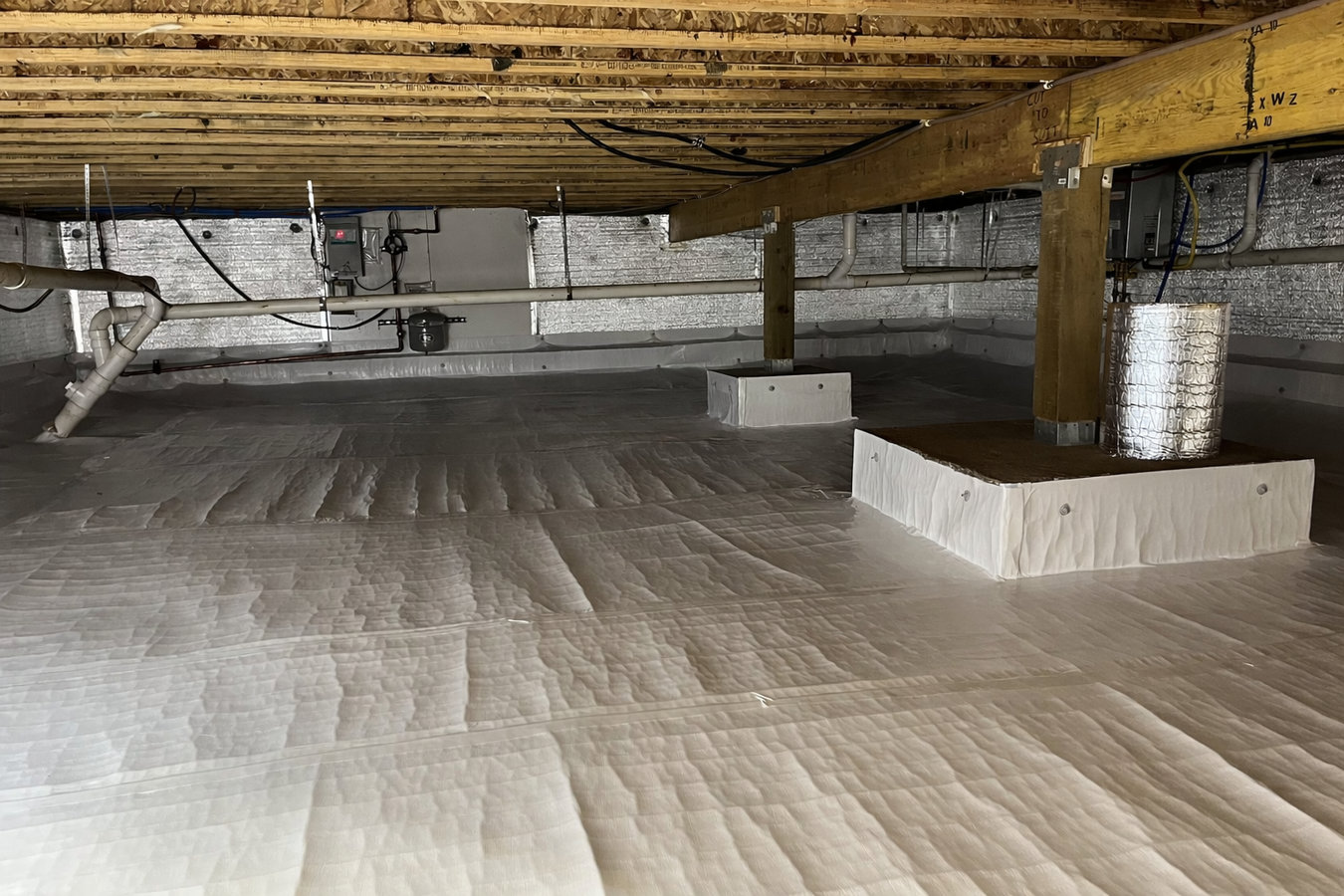
Bare dirt under your home is a direct path for moisture to reach your floor framing. We install durable barriers that stop that cycle before it causes rot, mold, or musty smells.
Crawl space vapor barrier installation in Walla Walla means laying heavy-duty plastic sheeting across the bare dirt floor of your crawl space and securing it to the foundation walls, blocking ground moisture from rising up into your floor framing - most jobs on a standard single-family home are completed in one to two days with no disruption to your living space.
Walla Walla winters push moisture up from the soil in ways that most homeowners never see until the damage is already done. Many homes in the city - particularly older properties in neighborhoods near downtown and College Place - were built before crawl space moisture protection was standard practice. If yours is one of them, bare dirt under your floors is working against your home every wet season. The consequences are gradual: musty smells, cold floors in winter, and eventually soft spots in the wood framing that costs far more to repair than the barrier would have cost to install.
A vapor barrier pairs naturally with crawl space insulation - the barrier handles moisture from the ground while insulation handles the cold. If you are dealing with moisture concerns in other parts of your home as well, our vapor barrier installation service covers below-grade walls and basement floors too.
If a damp, earthy odor creeps back into your home every March or April, it is almost always coming from below your floors. Walla Walla winters push moisture into the soil under homes, and when that moisture has nowhere to go but up, it produces the smell most homeowners recognize immediately. Waiting on it lets mold establish itself in the floor framing, which is a much bigger problem to fix.
Floors that feel noticeably colder than the rest of your home in winter, or spots that have a little give when you walk across them, are signs that moisture has been working on the wood underneath. The cold comes from damp air rising through unprotected framing. The softness means the wood itself may be starting to break down - and that is a structural concern, not just a comfort one.
If your home was built before the mid-1980s and you have never had the crawl space inspected, there is a real chance it has no barrier at all or one that has degraded beyond usefulness. This is especially common in Walla Walla's older neighborhoods. A quick look into the access hatch with a flashlight can tell you immediately whether bare dirt is exposed - and if it is, that alone is enough to act on.
Walla Walla's freeze-thaw cycles and spring snowmelt can push water into crawl spaces that are not properly sealed. If you have ever looked into your crawl space after a wet stretch and seen moisture beading on pipes or pooling on the dirt floor, you are past the point of prevention. Continuing to leave it unaddressed accelerates wood decay and creates conditions where mold thrives year-round.
We start by physically entering your crawl space to assess what is there - current ground conditions, any existing moisture or mold, the height and accessibility of the space, and whether any prep work is needed before the barrier goes down. We then install thick, durable polyethylene sheeting across the entire ground surface, overlapping the seams and securing the edges against your foundation walls so the barrier stays in place through seasonal shifts. No bare dirt is left exposed, and no seam is left loose.
We also offer vapor barrier installation for below-grade areas beyond just the crawl space - including basement floors and walls where moisture enters from the foundation. If your crawl space also needs thermal protection from the cold, pairing the barrier with crawl space insulation addresses both moisture and heat loss in a single project.
Suited for homes with a typical dirt-floor crawl space where the main need is stopping ground moisture from rising into the floor framing.
Best for older homes or spaces with existing debris, standing water, or deteriorated old sheeting that needs to be cleared before a new barrier can be properly installed.
Walla Walla sits in a semi-arid climate, but that label is misleading for homeowners thinking about crawl space moisture. Winters here bring consistent freezing temperatures and snowmelt that push moisture into the soil under homes. Then summer irrigation across the valley - from vineyards, farms, and residential yards - keeps groundwater levels elevated even during dry months. That combination means the ground under many Walla Walla homes is actively working against unprotected floor framing year-round, not just in wet weather. A vapor barrier is your home's first line of defense against that pressure. According to the U.S. Department of Energy, moisture control in crawl spaces is one of the most effective measures homeowners can take to protect structural integrity and indoor air quality. Homeowners in College Place share the same soil conditions and housing age profile and see the same moisture patterns - we serve that area as part of our regular coverage.
A large share of Walla Walla's residential neighborhoods were built in the 1940s through 1970s, before crawl space moisture protection was a standard part of construction. These homes often have no barrier at all, or one so old it has become brittle and full of gaps. Our experienced crews know these older homes well, start every project with a free written estimate, and document the work so you have a clear record of what was done. Homeowners in Milton-Freewater just across the Oregon border deal with similar valley-floor moisture conditions during the growing season and qualify for the same service.
We reply within one business day. When you reach out, we ask a few basic questions - home age, crawl space accessibility, and any specific problems you have noticed - so we arrive prepared for the estimate visit rather than starting from zero.
We physically enter your crawl space to assess the current ground conditions, access difficulty, and whether any prep work is needed first. This visit is your chance to ask questions - we will explain what we found and exactly what we are recommending before you commit to anything.
You receive a written estimate that specifies what materials will be used, what thickness, and what prep work is included. No surprises on installation day. We schedule the job at a time that works for you - most installations are completed in a single day.
The crew works entirely below your home - your living space stays undisturbed. Before leaving, we walk you through what was installed and show you the finished work. We will also flag anything else we noticed in the crawl space that is worth keeping an eye on.
Free estimate. No obligation. We reply within one business day.
(509) 516-0681We have been in crawl spaces throughout Walla Walla - from tight 1940s bungalows near downtown to newer construction on the east side of town. That means we know what the soil looks like after a wet winter and what kind of prep work older homes typically need before a barrier goes in. You do not have to explain the local conditions to us.
Every project starts with a free written estimate that spells out the scope and the cost before any work begins. We document the work we complete on each job, so you have a clear record of exactly what was installed - not just a verbal promise.
We use thick, high-quality polyethylene sheeting and secure every edge to the foundation walls rather than loosely laying it on the floor. Seams are overlapped and taped. Every inch of exposed ground is covered. The difference between a well-installed barrier and a poor one is almost entirely about those details - and they are exactly the details we do not skip.
We will tell you what we found in your crawl space and explain what it means in plain terms - not just recommend the most expensive option. If your crawl space genuinely needs a barrier, we will say so and show you why. If something else needs to happen first, like mold remediation, we will tell you that too rather than just covering the problem up.
A vapor barrier is one of the most cost-effective ways to protect a Walla Walla home - but only when it is installed correctly, with the right materials, and by someone who actually knows what they are looking at under your floor. That is the standard we hold ourselves to on every job.
Full vapor barrier installation for crawl spaces and below-grade areas, using durable materials sized and secured for your specific space.
Learn MoreInsulate the floor and walls of your crawl space to stop cold from migrating up into your living areas in winter.
Learn MoreSpring is when moisture levels peak under homes here - the best time to act is now, before another wet season adds to the damage.